
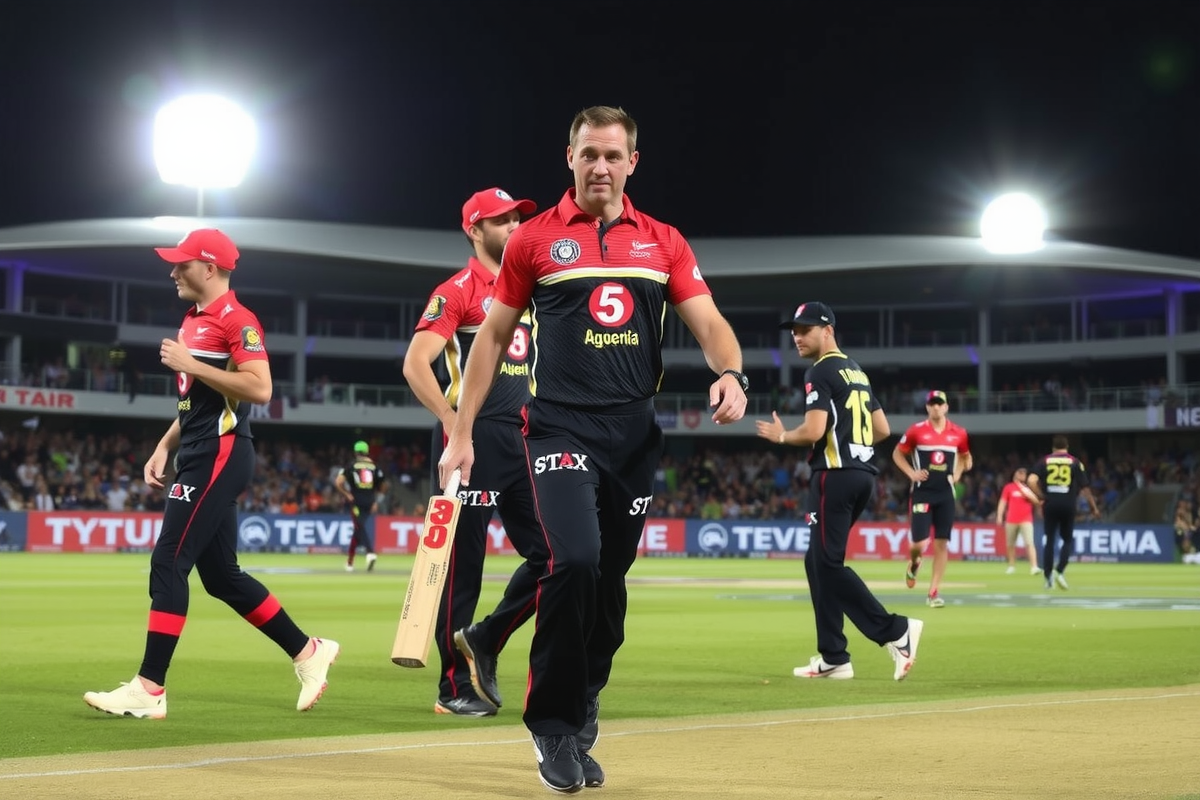
In an exclusive interview with a leading sports business journalist, Cricket Australia chief executive Todd Greenberg outlined the governing body’s next move in the controversial privatisation of the Big Bash League franchise model. Greenberg confirmed that Victoria, Western Australia and Tasmania have signaled willingness to move to the second stage of market testing, while South Australia remains on the fence about including the Adelaide Strikers in any initial sale. The plan, he said, is not a full‑scale auction but a market probe that will solicit non‑binding expressions of interest and valuation estimates from potential investors.
“What we are doing is essentially a feasibility study,” Greenberg explained. “We want to see what price points the market attaches to each franchise when a stake – ranging from 49 percent up to 100 percent – is put on the table. Those figures will then inform how we structure any eventual sale, but we are a long way from any final decision.”
BBL Franchise Privatisation: State Responses and Financial Strategy
The interview came after New South Wales and Queensland publicly rejected CA’s original proposal to sell all eight BBL clubs simultaneously. Greenberg noted that the dissent stemmed from different concerns. New South Wales objects to any arrangement that would tie the league more closely to wagering operators, a stance reinforced in a recent letter to its members that emphasized the need to optimise broadcast, ticketing and commercial partnerships without increasing betting‑related revenue. Queensland, by contrast, questioned the competitiveness of BBL player salaries relative to emerging global leagues such as SA20, the ILT20 and the prospective New Zealand franchise tournament.
Greenberg rejected the notion that Australian cricket is financially distressed. “The league has been profitable for many years, and our expense structure is largely insulated from the participation of our top international players,” he said. “Nevertheless, we see an opportunity to diversify revenue streams and to bring in external capital that could fund future growth, especially as global franchise valuations continue to climb.”
BBL Ownership Models: Equity Stakes and Market Valuations
Under the current framework, each state holds a 30‑year lease on its BBL franchise, a lease that is now halfway through its term. Greenberg described the proposed sale model as offering the states a choice of equity percentages: a 49 percent stake would leave the state owning the remaining 51 percent outright, while a 75 percent stake would see the state retain only a quarter of ownership. In the 49 percent scenario, the state would also receive a cash injection from CA, equal to a pre‑negotiated share of the total sales pool. With any stake above 50 percent, the investor would gain a seat at the table for BBL decision‑making, though that voice would be one of eight, mirroring the current governance structure when CA seeks stakeholder input on schedules, player contracts and competition rules.
The chief executive drew parallels with the England and Wales Cricket Board’s recent sale of The Hundred franchises, a process overseen by the same advisory firm, Raine Group. “The Raine Group is advising us on both the Hundred and our BBL market testing,” Greenberg noted. “The ECB’s experience shows that the value of a franchise can vary widely depending on the share percentage sold and the composition of the buyer pool.”
He cited recent comparators: Trent Rockets and Birmingham Phoenix, both 49 percent sold to non‑cricket investors, fetched roughly AUD 76 million and AUD 73 million respectively. If the Melbourne Renegades were sold at 100 percent, the entire club would pass to a single private owner, an outcome that could attract IPL‑style operators looking to replicate the brand‑building success seen in England’s franchise market. Greenberg hinted that such a scenario could see an overseas consortium taking over the Renegades and potentially playing home matches at the Melbourne Cricket Ground, a venue that has historically drawn large crowds.
The interview also touched on the logistics of the proposed sales. The states would need to decide whether to sell a minority stake, retain full control, or wait for future rounds of privatisation. South Australia, for instance, has indicated it is not ready to offload the Strikers now but could reconsider if the initial sales prove successful. Greenberg said the market test will produce valuation ranges – estimates have floated between AUD 80 million and AUD 180 million per team – that will help the board gauge whether a sale is financially attractive.
IPL Investor Interest: Capital Growth and League Governance
When asked about the role of international investors, especially those from the Indian Premier League, Greenberg acknowledged heightened scrutiny. “We are aware that several IPL owners are already eyeing stakes in the BBL,” he said. “They have rebranded clubs in England’s Hundred competition, and some have already moved into other jurisdictions. Their involvement could bring fresh capital, but it also raises questions about governance, player availability and the long‑term direction of Australian cricket.”
Regarding the ethical dimension of wagering integration, Greenberg reaffirmed CA’s position. “Our stance is that sport should not be predicated on gambling revenue,” he said. “We are focusing on other commercial streams while still ensuring we can offer competitive salaries to attract top talent globally.” The chief executive concluded with a timeline. “The responses we receive during the market testing phase will give us concrete data,” he said. “If those figures align with our expectations, we will move forward with a structured auction process for those states that choose to participate. Until then, the conversation remains exploratory, and we will continue to engage with all stakeholders to address concerns.”
The interview ends with Greenberg emphasizing that the ultimate goal is to secure the BBL’s long‑term sustainability while preserving state‑level control over cricket decision‑making. “We are not rushing to sell,” he said. “We are testing the market, learning from comparable global experiences, and ensuring any future privatisation aligns with the broader interests of the sport.”
