
Reading Cricket Betting Odds & Calculating Payouts
 Available in US
Understanding betting odds represents the single most fundamental skill for anyone wagering on cricket. Odds communicate two essential pieces of information simultaneously: the probability bookmakers assign to an outcome and the potential return you will receive if your bet wins. Misunderstanding odds leads to poor bet selection, incorrect stake sizing, and an inability to identify value.
The apparent complexity of odds stems partly from the existence of multiple formats used across different regions and platforms. Decimal odds dominate in Europe and Australia, fractional odds remain common in the United Kingdom, and American odds prevail in North American sportsbooks. Each format expresses the same underlying information differently, and converting between them becomes second nature with practice.
This guide breaks down cricket betting odds from first principles, covering the major formats, calculation methods, and strategic applications. Whether you are new to cricket betting or an experienced bettor looking to sharpen your analytical approach, understanding odds deeply improves every aspect of your wagering.
Primary Types of Betting Odds Formats

Sportsbooks display odds in different formats depending on their target markets and historical conventions. The three dominant formats each have advocates and detractors, but they all convey identical information about probability and potential returns. Learning to read all three formats provides flexibility when using sportsbooks from different regions and eliminates confusion when odds are quoted in unfamiliar styles.
Most modern betting platforms allow you to select your preferred odds format in account settings, displaying all odds consistently in whatever style you find most intuitive. However, understanding alternative formats remains valuable for reading betting discussions, following tipsters who use different conventions, and quickly interpreting odds when you encounter them in any context.
The format you find most natural often depends on where you learned to bet and which mathematical representation aligns with your thinking. Some bettors prefer seeing their potential profit directly in the odds. Others want to see total returns including stake. Still others think most naturally in probability terms. Each format emphasizes different aspects of the same underlying mathematics.
Decimal Odds Explained
Decimal odds represent total returns per unit staked, including your original stake in the figure. Odds of 2.50 mean that a winning one-unit bet returns 2.50 units total: your original stake plus 1.50 units of profit. This format dominates in continental Europe, Australia, and increasingly worldwide as online betting has standardized around decimal display.
The mathematical simplicity of decimal odds makes calculations straightforward. To find potential returns, multiply your stake by the decimal odds. A fifty-dollar bet at odds of 3.20 returns 160 dollars if successful. To find profit alone, subtract one from the odds before multiplying. That same bet produces 110 dollars profit, calculated as fifty dollars times 2.20.
Decimal odds always exceed 1.00, with higher numbers indicating less likely outcomes that pay more when they occur. Odds near 1.00 represent heavy favorites with minimal returns. Odds above 10.00 indicate significant underdogs. The range between roughly 1.50 and 4.00 covers most competitive cricket betting markets where neither side is dramatically favored.
Fractional Odds Explained
Fractional odds express potential profit relative to stake as a ratio. Odds of 5/2 mean you profit five units for every two units staked if your bet wins. This format has deep roots in British betting culture and remains common in UK sportsbooks and horse racing contexts, though decimal odds have gained ground even in traditional fractional markets.
Reading fractional odds requires understanding the ratio relationship. The first number represents potential profit while the second represents the stake required to earn that profit. Odds of 7/4 mean seven units profit from four units staked, equivalent to decimal odds of 2.75. Odds of 1/3 mean one unit profit from three units staked, representing a heavy favorite at decimal odds of 1.33.
Fractional odds can appear in various equivalent forms that represent the same value. Odds of 2/1 equal 4/2 or 6/3, though bookmakers typically reduce fractions to simplest terms. Some fractions like 11/10 or 6/5 appear frequently for slight underdogs, while 4/6 or 8/13 indicate modest favorites. Familiarity with common fractional values develops through exposure to markets using this format.
American Odds Explained
American odds use positive and negative numbers to indicate underdogs and favorites respectively. Positive odds show profit from a one-hundred-dollar stake, while negative odds show the stake required to profit one hundred dollars. This format dominates in United States sportsbooks and appears whenever American platforms cover cricket markets.
Positive American odds translate directly to profit amounts. Odds of +250 mean a one-hundred-dollar winning bet profits 250 dollars. The conversion to decimal odds divides the American odds by one hundred and adds one, making +250 equivalent to decimal 3.50. Higher positive numbers indicate longer odds and less likely outcomes.
Negative American odds require dividing one hundred by the absolute value of the odds to find profit per hundred staked. Odds of -150 mean you must stake 150 dollars to profit one hundred dollars, equivalent to decimal odds of 1.67. Larger negative numbers indicate heavier favorites with lower returns. The -110 line common on spread bets represents the standard bookmaker margin on even-probability events.
How to Read Cricket Betting Odds

Reading odds goes beyond converting between formats to understanding what odds communicate about probability assessments and market conditions. When a sportsbook posts odds of 1.80 on one cricket team and 2.10 on their opponent, these numbers reflect judgments about likely outcomes adjusted to ensure bookmaker profit regardless of results.
The odds on offer represent the sportsbook's opinion filtered through their business requirements. They assess probabilities, adjust for uncertainty, and build in margins that ensure long-term profitability. Understanding that odds reflect this commercial reality rather than pure probability assessment helps you recognize when markets might be exploitable.
Comparing odds across different bet types within the same match reveals how sportsbooks view various aspects of the contest. Match winner odds, total runs lines, and player prop markets all relate to the same underlying match but emphasize different analytical dimensions. Reading these related odds together provides richer understanding than examining any single market in isolation.
Interpreting Match Winner Odds
Match winner odds directly express relative team strength assessments. When one team opens at 1.60 and their opponent at 2.40, the sportsbook considers the first team significantly more likely to win. The specific gap between these odds quantifies the perceived advantage, with wider gaps indicating more lopsided expectations.
Odds movement after initial posting reveals how betting markets respond to new information and betting patterns. If odds on the favorite shorten from 1.60 to 1.50 while the underdog drifts from 2.40 to 2.60, money has flowed toward the favorite, either from sharp bettors with superior information or from public bettors following popular opinion. Distinguishing between these possibilities helps assess whether movements represent genuine probability shifts.
Test match odds include draw possibilities that limited-overs formats lack. Three-way markets with odds on each team winning plus draw odds require different analytical approaches than two-way markets. The draw probability varies significantly based on venue, weather forecasts, and team characteristics, making Test match odds interpretation more complex than formats that guarantee a result.
Understanding Line and Total Odds
Spread betting in cricket typically involves handicap lines that give virtual advantages to underdogs or require favorites to win by margins. A team at -1.5 runs on a handicap must win by more than 1.5 runs for bets on them to succeed. Understanding how these lines work and what odds on each side imply about expected margins enriches your betting options.
Total runs markets set over/under lines for innings or match scoring, with odds on each side reflecting probability assessments. A line set at 165.5 total runs with -110 odds on both sides suggests the sportsbook sees roughly equal probability of the total falling above or below that threshold. Asymmetric odds like -130 on the over and +110 on the under indicate the sportsbook expects higher scoring while protecting against lopsided betting.
Player proposition odds cover individual performance thresholds such as runs scored, wickets taken, or specific achievements. These markets often carry higher margins than match-level betting because they are more difficult to price accurately. Understanding that player props typically offer less value than main markets should influence how you allocate betting attention.
Calculating Potential Winnings
Accurate calculation of potential returns ensures you understand exactly what successful bets will pay before placing them. While betting platforms display potential returns automatically, knowing how to calculate independently catches errors, allows quick mental estimation, and supports comparison across sportsbooks with different interfaces.
The fundamental calculation multiplies stake by odds to find total returns, then subtracts stake to find profit. Decimal odds make this calculation trivial since the odds number directly represents the returns multiplier. Fractional and American odds require intermediate conversion steps that become automatic with practice.
Accumulator bets multiply odds across multiple selections, creating larger potential returns with correspondingly lower win probability. A four-leg accumulator combining decimal odds of 1.80, 2.10, 1.65, and 2.40 produces combined odds of 13.36, found by multiplying all four individual odds together. Understanding this multiplication relationship helps assess whether accumulator returns justify their reduced win probability.
Return Calculations for Different Stake Sizes
Adjusting calculations for different stake sizes follows the same mathematical principles regardless of amount. A hundred-dollar stake at decimal odds of 2.50 returns 250 dollars. A twenty-dollar stake at the same odds returns fifty dollars. The ratio remains constant.
Fractional odds require multiplying stake by the fraction to find profit, then adding stake to find total returns. A fifty-dollar bet at 7/2 odds profits 175 dollars, calculated as fifty times 3.5, with total returns of 225 dollars.
American odds calculations differ between positive and negative values. For positive odds, multiply stake by odds divided by one hundred to find profit. For negative odds, multiply stake by one hundred divided by the absolute odds value. These formulas become intuitive with regular use.
Calculating Combined Odds for Accumulators
Accumulator odds multiply individual selection odds together, which works directly with decimal odds. Converting all selections to decimal format first simplifies accumulator calculations regardless of how individual odds are originally displayed.
The probability of winning accumulators decreases multiplicatively as selections increase. Two independent events each with fifty percent probability combine to twenty-five percent probability for both occurring. This mathematical reality means accumulators become increasingly unlikely as legs are added.
Expected value calculations for accumulators multiply win probability by potential returns and subtract stake. However, margins compound across accumulator legs, typically making accumulators poor expected value despite attractive headline returns.
Understanding Implied Probability

Implied probability converts odds into probability terms, revealing what chance of winning the odds suggest. This conversion enables direct comparison between your assessed probability of outcomes and the probability embedded in market prices. When your probability assessment exceeds implied probability, you have identified potential value.
The conversion formula for decimal odds divides one by the decimal odds to find implied probability. Odds of 2.50 imply probability of forty percent, calculated as one divided by 2.50 equals 0.40. Odds of 1.80 imply probability of 55.6 percent. This simple division works for any decimal odds value.
Implied probabilities across all outcomes in a market sum to more than one hundred percent, with the excess representing the bookmaker's margin. A match with one team at 1.80 and the opponent at 2.10 produces implied probabilities of 55.6 percent and 47.6 percent, summing to 103.2 percent. That 3.2 percent represents the margin built into these odds.
Converting Odds to Probability
Fractional odds convert to implied probability by dividing the denominator by the sum of numerator and denominator. Odds of 5/2 imply probability of 28.6 percent, calculated as two divided by seven.
American odds conversion differs between positive and negative values. For positive odds, divide one hundred by the sum of the odds plus one hundred. For negative odds, divide the absolute value by the absolute value plus one hundred.
Practicing these conversions until they become automatic enables rapid assessment of odds across different formats. Mental approximations often suffice: decimal odds of 3.00 imply roughly thirty-three percent probability, fractional odds of 2/1 imply the same.
Identifying Value Through Probability Comparison
Value exists when your probability assessment exceeds implied probability. If you believe a team has fifty percent chance of winning but odds imply only forty percent, betting on that team offers positive expected value. The ten percentage point difference represents your edge.
Quantifying your probability assessments honestly challenges most bettors. Saying a team should win does not specify whether you mean fifty-five percent or seventy-five percent probability, yet this distinction determines whether available odds offer value.
Expected value calculation multiplies your assessed probability by potential profit and subtracts the probability of losing multiplied by stake. Positive expected value over many bets generates profit despite individual losses.
Why Odds Change
Odds movement reflects the dynamic nature of betting markets as new information emerges and betting patterns develop. Understanding why odds change helps you interpret movements correctly, distinguishing between meaningful probability shifts and noise driven by imbalanced betting. Strategic bettors sometimes base decisions more on how odds are moving than on the odds themselves.
Information-driven movement occurs when news changes actual probabilities. Team announcements, injury updates, weather changes, and toss outcomes all provide information that should shift odds. Markets that respond quickly to information are considered efficient, while delayed responses create opportunities for informed bettors to capture value before adjustment.
Money-driven movement occurs when betting volume on one side forces sportsbooks to adjust odds to balance their exposure. A flood of bets on one team shortens their odds and lengthens the opponent's, regardless of whether the betting reflects superior information or merely popular sentiment. Distinguishing information from money movement requires assessing whether news justifies the shift.
Reading Line Movement
Sharp money from professional bettors typically moves lines before public betting patterns become apparent. When odds shift significantly without obvious news, sharp action often explains the movement. Following these movements can reveal where informed money is going.
Steam moves represent rapid, coordinated line movement across multiple sportsbooks, usually indicating large sharp bets placed simultaneously. These movements happen quickly and opportunities to capture pre-movement prices disappear within minutes.
Reverse line movement occurs when odds move opposite to public betting percentages. If seventy percent of bets back one team but their odds lengthen rather than shorten, sharp money on the other side likely outweighs public volume. This pattern suggests professional assessment differs from popular opinion.
Timing Your Bets Around Odds Movement
Early odds often contain more uncertainty than odds closer to match time, creating different value opportunities at different points. Some bettors specialize in capturing value in early markets before full information emerges. Others prefer waiting for team news and conditions to clarify before betting.
Live betting creates continuous odds movement throughout matches as events unfold. The speed of adjustment varies between sportsbooks and situations, occasionally creating windows where odds lag behind appropriate levels. Recognizing these windows and acting quickly can capture live value.
Historical odds movement patterns at certain sportsbooks reveal tendencies that strategic bettors can exploit. Some books consistently move slowly on certain sports or bet types. Learning these platform-specific behaviors through observation helps time bet placement for optimal prices.
Finding the Best Cricket Odds

Odds shopping across multiple sportsbooks consistently improves long-term results by ensuring you always bet at the best available price. The difference between odds of 2.10 and 2.20 on the same outcome represents nearly five percent additional return on winning bets. Across hundreds of bets, these differences compound into substantial profit improvement.
Maintaining funded accounts at several reputable sportsbooks provides the infrastructure for effective odds shopping. The administrative overhead of managing multiple accounts pays for itself through improved prices. Even if you prefer one platform for most betting, checking alternatives before placing significant wagers ensures you do not leave value on the table.
The best odds on favorites often differ from the best odds on underdogs across different sportsbooks. Some platforms systematically offer better prices on one side of markets due to their customer base characteristics. Understanding these tendencies helps you direct specific bet types to platforms where you will receive superior prices.
Using Odds Comparison Tools
Odds comparison websites aggregate prices across dozens of sportsbooks, displaying best available odds for each selection. These tools eliminate the tedious process of manually checking multiple sites, showing immediately where the best prices exist for markets you are considering.
Comparison tools vary in coverage, update speed, and reliability. Some focus on specific sports with comprehensive cricket coverage while others emphasize breadth across all sports with shallower depth in each. Testing multiple comparison tools helps identify which best serves your cricket betting needs.
Mobile comparison apps provide odds shopping capability from anywhere, supporting price comparison even when betting on mobile devices. These apps typically allow setting alerts for when odds reach target levels, notifying you when opportunities emerge rather than requiring constant monitoring.
When Odds Differences Matter Most
Larger stakes magnify the importance of small odds differences. A ten-dollar recreational bet at 2.10 versus 2.20 differs by one dollar in potential returns, hardly worth effort to optimize. A five-hundred-dollar bet at the same prices differs by fifty dollars, justifying careful shopping.
Accumulator odds multiply small differences across legs into substantial overall impact. Each leg bet at slightly worse odds reduces combined returns multiplicatively. Shopping each leg of an accumulator individually improves expected returns more than proportionally.
Markets with inherently thin margins leave less room for odds variation between sportsbooks. Major international matches attract enough betting volume that competitive pressure drives odds to similar levels across platforms. Less prominent matches show more variation, making odds shopping more rewarding for cricket outside the highest-profile fixtures.
Odds for Different Cricket Formats
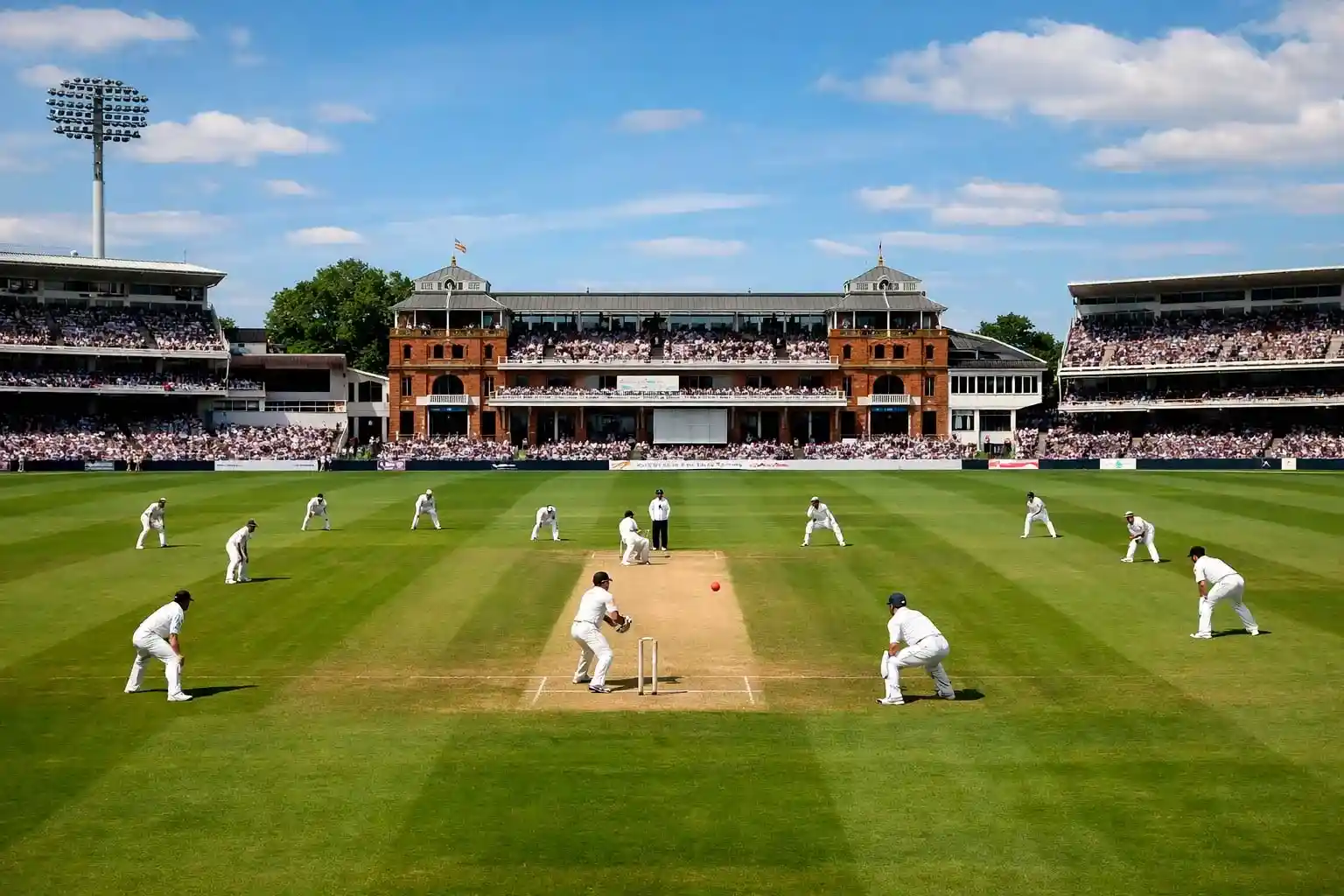
Odds behavior differs meaningfully across Test matches, One Day Internationals, and T20 cricket due to format-specific characteristics that influence probability distributions and market structures. Understanding these differences helps interpret odds appropriately for each format rather than applying uniform assumptions.
Test cricket's five-day duration and draw possibility create three-way markets where favorites are typically less heavily favored than in limited-overs formats. The inherent uncertainty across five days moderates extreme probability assessments. Odds on Test favorites rarely drop below 1.50 even for dominant teams because too many variables can intervene over the match duration.
Limited-overs formats produce guaranteed results, eliminating draw probability and concentrating probability mass on two outcomes. This tends to create slightly shorter odds on favorites compared to equivalent Test match assessments. The compressed timeframes also reduce opportunity for variance to impact results, though T20's brevity paradoxically increases variance through greater individual influence.
Test Match Odds Characteristics
Draw odds in Test cricket vary dramatically based on venue history, weather forecasts, and team characteristics. Some grounds historically produce draws at thirty percent rates while others see draws below ten percent. Understanding venue-specific draw tendencies helps assess whether posted draw odds reflect appropriate probability.
Session and day betting provides shorter-term Test match betting options with odds that reset at each interval. These markets allow participation without committing to five-day outcomes and offer opportunities to respond to emerging match conditions. Session odds reflect immediate situation assessments rather than full-match projections.
Declaration strategies and tactical maneuvering in Test cricket create late-match situations where odds can shift dramatically. A team setting an aggressive declaration might see their win odds shorten while draw odds lengthen as they risk defeat for victory chances. These tactical dynamics make late-stage Test match odds particularly dynamic.
T20 and ODI Odds Patterns
T20 odds reflect the format's high variance through relatively compressed favorite prices. Even strong favorites in T20 matches typically price above 1.40 because a single exceptional individual performance can determine outcomes regardless of team quality differentials.
ODI odds occupy middle ground between Test match uncertainty and T20 variance. Fifty overs provide enough time for quality differences to manifest more reliably than in T20 while still guaranteeing results within a single day. ODI favorites tend to be more heavily favored than T20 equivalents when team quality gaps exist.
Tournament and series odds for limited-overs competitions introduce accumulating uncertainty across multiple matches. A team favored in individual matches might still face long odds for tournament victory due to the compounding probability of winning consecutive matches.
Conclusion
Mastering cricket betting odds unlocks the analytical foundation supporting all sophisticated wagering approaches. The mathematics is accessible once properly explained, and the concepts apply universally across formats, bet types, and sportsbooks.
Implied probability conversion transforms odds from abstract numbers into comparable assessments you can evaluate against your own analysis. This conversion is the essential step in value identification, distinguishing positive expected value opportunities from bets where the sportsbook holds the edge.
Odds shopping across multiple platforms consistently captures additional value that compounds over betting careers. Combined with solid understanding of what odds mean and how they move, systematic odds shopping elevates your cricket betting from casual participation to informed engagement with genuine profit potential.
