
The Ashes Betting: Match Odds & Historical Trends
 Available in US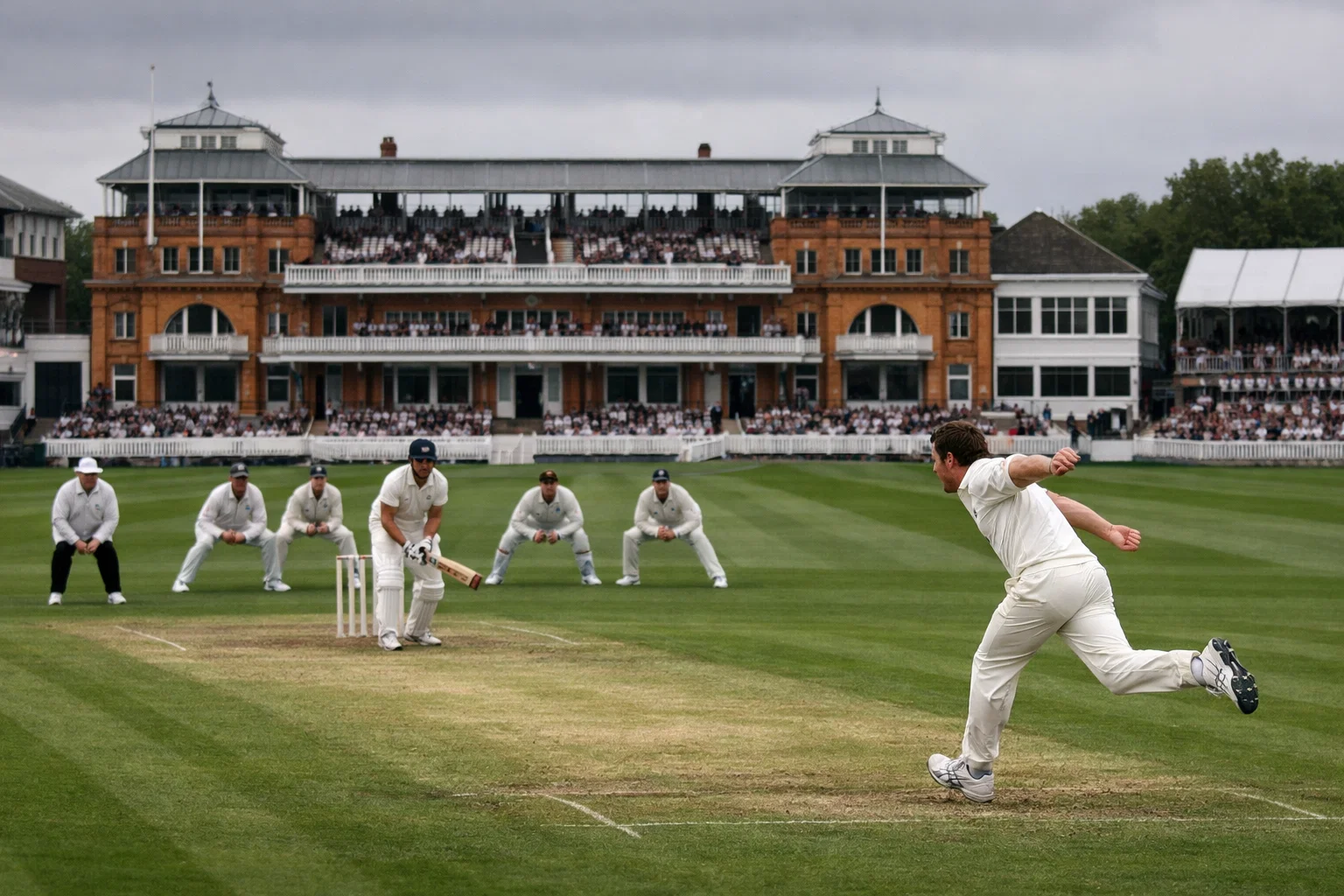
No cricket series generates as much emotion, history, and betting interest as the Ashes. England versus Australia across five Test matches is the pinnacle of cricket rivalry, and it produces a betting landscape that combines the analytical depth of Test cricket with the narrative weight of a contest that has been running since 1882. The Ashes is also one of the few cricket events where the draw is not a boring outcome but a genuinely strategic one — a team trailing 1-0 with two matches to play approaches the remaining Tests with a fundamentally different tactical mindset than a team leading.
Betting on the Ashes requires patience, format-specific knowledge, and an understanding of how conditions change across venues and across the duration of a five-match series. This guide covers the key markets, the role of pitch and weather in shaping odds, and how to trade positions as the series unfolds.
Because five-day matches have unique dynamics, we highly recommend reading our comprehensive Test match betting guide to understand pitch deterioration and session betting.
Series-Level Betting Markets for Top Returns
The series winner market is the flagship Ashes bet, and it operates as a three-way market: England win, Australia win, or drawn series. The inclusion of the draw as a priced outcome is critical, because drawn Ashes series are not rare — they have occurred multiple times in the modern era. The draw price is typically the longest of the three options before the series starts, but it shortens dramatically if the first two Tests are shared.
Pricing the series winner requires thinking about cumulative probability across five matches rather than treating each match in isolation. If you believe Australia has a 45% chance of winning each individual Test, that does not translate to a 45% chance of winning the series. The mathematics of series outcomes — considering the probability of draws in individual Tests, the various combinations of results that produce a series winner, and the impact of momentum — are complex enough that the sportsbook models sometimes produce prices that a careful bettor can disagree with productively.
Correct series score is a more granular market that pays out based on the exact final scoreline — 3-1 to Australia, 2-2 draw, 3-0 to England, and so on. This market offers higher odds but requires greater precision. The value typically lies in scorelines that involve at least one drawn Test, because the market tends to overweight decisive results where one team sweeps the series. In practice, most Ashes series produce at least one drawn or rained-off Test, particularly when played in England, where weather interruptions are a fact of life.
Top series batsman and bowler markets let you bet on which individual will score the most runs or take the most wickets across the entire series. These are long-range proposition bets with significant variance, but they reward deep knowledge of player records at specific venues. A fast bowler who thrives in English conditions — overcast skies, pitches with lateral movement, a Duke ball that swings until it is 60 overs old — may offer better value for top series bowler than a higher-ranked bowler whose skills are better suited to Australian pitches.
Pitch and Weather: The Invisible Fifth Player
The Ashes rotates between English and Australian venues, and the conditions at each ground are so different that they effectively create distinct sub-games within the series. Understanding these conditions is not optional for Ashes bettors — it is the foundation on which every other analysis rests.
English venues — Lord's, Headingley, Edgbaston, The Oval, Trent Bridge, and Old Trafford are the regulars — generally favour seam bowling, particularly early in the match when the pitch has moisture and the Duke ball is new. Overcast conditions, common across English summers, amplify the lateral movement and make batting difficult on the first morning. First-innings totals in English Ashes Tests are often lower than in Australia, and the over/under runs line for a match in Leeds or Nottingham should be set meaningfully lower than one in Brisbane or Perth.
Australian venues present a different challenge entirely. The Gabba in Brisbane offers pace and bounce, the MCG in Melbourne is historically flat and attritional, the SCG in Sydney provides turn as the match progresses, and the WACA or Optus Stadium in Perth has historically been the fastest and bounciest pitch in world cricket. Adelaide Oval, especially under lights in day-night Tests, adds the complication of a pink Kookaburra ball that behaves differently under artificial lighting. Each of these venues produces a distinct statistical profile for runs scored, wickets per session, and match duration that should inform your betting on individual Tests within the series.
Weather interruptions matter more in English Ashes Tests than almost any other context in cricket betting. Rain delays do not just cost playing time — they change the condition of the pitch and the behaviour of the ball. A pitch that dries after a rain delay can crack and become unpredictable, while a ball that has been kept dry during a stoppage can swing more aggressively when play resumes. The Duckworth-Lewis-Stern method does not apply to Tests, so lost time simply means fewer overs available to achieve a result, pushing the draw price down. Bettors who monitor weather forecasts closely — and adjust their positions when a significant weather front approaches during a match — gain an edge that the static pre-match odds cannot reflect.
Individual Test Betting: Match-by-Match Strategy
Each Ashes Test is its own betting event, and the markets available for individual matches mirror those of any Test: match winner (three-way including the draw), first-innings lead, session runs, top batsman, top bowler, and method of dismissal. The added dimension in the Ashes is that each Test exists within the context of the series. The third Test of an Ashes series where one team leads 2-0 is a fundamentally different betting proposition to the third Test at 1-1, even if it is played at the same venue with the same teams.
A team trailing in the series will often make bold selection changes — dropping experienced players, promoting aggressive batsmen, changing the bowling combination — in an attempt to shift the momentum. These changes create opportunities for alert bettors. When a team brings in a fresh fast bowler for the third Test because their existing attack has been ineffective, the top bowler market might not immediately adjust to reflect the newcomer's potential impact. Similarly, a promoted batting order can disrupt the sportsbook's model for top batsman odds, particularly if the promoted player has a strong record at the specific venue.
The draw market in individual Ashes Tests deserves special attention. Before the match begins, the draw is typically priced between 4.00 and 8.00 depending on the venue, weather forecast, and pitch preparation. As the match progresses and time is lost to weather or slow over rates, the draw price shortens. Experienced Ashes bettors often take pre-match positions on the draw at long odds in English Tests and then trade out during the match if rain arrives, locking in a profit without the match needing to actually end in a draw. This strategy requires capital and patience but has a strong historical record in English conditions.
Trading Positions as the Series Evolves
The Ashes series unfolds over roughly six to seven weeks, and the betting markets remain active throughout. This extended timeline creates opportunities for position trading — taking a pre-series position at one price and closing it at a better price as events unfold. The most effective trading strategy in Ashes betting is to identify which team the market is undervaluing before the series, take a position on them in the series-winner market, and then look for opportunities to hedge or cash out after a favourable result.
For example, if you back Australia at 2.50 to win the series and they win the first Test, Australia's series price might shorten to 1.60. You can either hold the position and ride the momentum, or cash out for a guaranteed profit regardless of the remaining results. The decision depends on your assessment of the remaining matches — if the first Test was played in conditions that suited Australia and the next two venues favour England, cashing out after the first Test might be the smarter play even though your position is in profit.
Momentum in the Ashes is a real but overstated force. The market tends to overreact to the most recent result, shortening the winning team's series price by more than the result justifies. A team that wins the first Ashes Test is not 70% likely to win the series — they still have four matches to play, potentially in very different conditions. These overreactions create buying opportunities for the opposing team. If England loses the Gabba Test (as they nearly always do in Australia) and their series price drifts from 3.50 to 6.00, that drift often overshoots the true probability because the market conflates one expected loss with a definitive series trend.
The Series That Defies the Spreadsheet
The Ashes has a quality that frustrates pure data analysts: it makes otherwise rational players do irrational things. Bowlers find extra pace they did not have in the bilateral series two months earlier. Batsmen play innings of desperate, heroic resistance that bear no resemblance to their usual scoring patterns. Captains make declarations that defy the standard risk-reward calculations because the weight of history and rivalry demands aggression.
This emotional intensity is not noise — it is signal. It is information about how specific players and teams will perform under a very particular type of pressure that only the Ashes generates. A bettor who factors in the psychological dimension of the Ashes — who understands that certain players rise to this occasion while others shrink from it — has access to a dataset that no statistical model captures.
The Ashes is the oldest, most storied, and most emotionally charged contest in cricket. Betting on it purely by the numbers will get you close. Betting on it with an understanding of what the numbers cannot measure will get you closer still.
Find the highest odds for the upcoming series by visiting Cricket Bet Sites, your ultimate resource for cricket wagering.
